

Here we suggest strategies to help all children engage with practical activities, maintain focus, record their learning and have a positive experience when carrying out practical work.
Supporting all children to take part in practical science lessons
Thinking Frames
A thinking frame is a rectangular frame with a hole or blank space in the middle for a picture or object which the child focuses on.
Around the outside are questions/prompts linked to the task and space to record children’s ideas and findings.
Thinking frames are easily adapted, can be used individually or as a whole class resource, with the same one adapted for the various needs in the class.
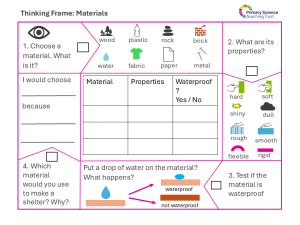
Benefits for children:
- Reduces children’s anxiety
- Maintains focus
- Provides clear signposts to help children if they are stuck
- Sense of success as learners move around the frame
- Develops children’s independence
- Supports children to approach something new
- Becomes a ritual – once children are familiar you can level up
- Simple format that teachers can differentiate in complexity
Benefits for Teachers:
- Helps refine your ideas for key learning
- Helps focus on the skill you want to develop
- Easy to tailor to needs of a group of children
- Easy to adapt by changing the questions
- Acts as a guide to other supporting adults
What do Thinking Frames look like?
Have a look at these examples to see how you might use Thinking Frames.
- Thinking Frame – Materials (ages 5-7)
- Thinking Frame – Rocks (ages 7-9)
- Thinking Frames – Pulse (ages 9-12)
You can adapt Thinking Frames for your own children’s needs, and for different topics and activities.
Our tips:
- Think carefully about what goes in the middle – an object to observe, or a table to complete?
- Think carefully about the questions you will ask to scaffold children’s learning – a thinking prompt or an instruction?
Download our Thinking Frame Templates to create your own.
How to use Thinking Frames
Think carefully about what goes in the middle. It could be a space for an object that you want children to focus on. It could be a space for children to record their learning.
Think very carefully about the questioning. What will you ask to scaffold children’s thinking? Will you ask children to do something?
Keep it simple.
Use icons if that is helpful for the children.
Consider how the children can self-assess each part. Use a tick box, traffic light or a smiley face for this.
Create different versions of the Thinking Frame by changing the questions so that you can adapt your teaching to the children’s needs in the lesson.
Science Role Cards
Science Role Cards define, in simple terms, different roles for children working in small groups during practical science activities.
Ready-to-use Role Cards
Available for groups of 3:
- Equipment and Health & Safety Officer
- Chief Recorder
- Communications Officer
Or groups of 4:
- Health & Safety Officer
- Equipment Officer
- Chief Recorder
- Communications Officer
Benefits for children
- Helps children to focus on working cooperatively in a team
- Reduces cognitive overload in practical work
- Develops social skills, e.g. making decisions, supporting others
- Helps children to feel that they are being real scientists
- Develops an understanding of the different work roles of a scientist
What do Science Role Cards look like?
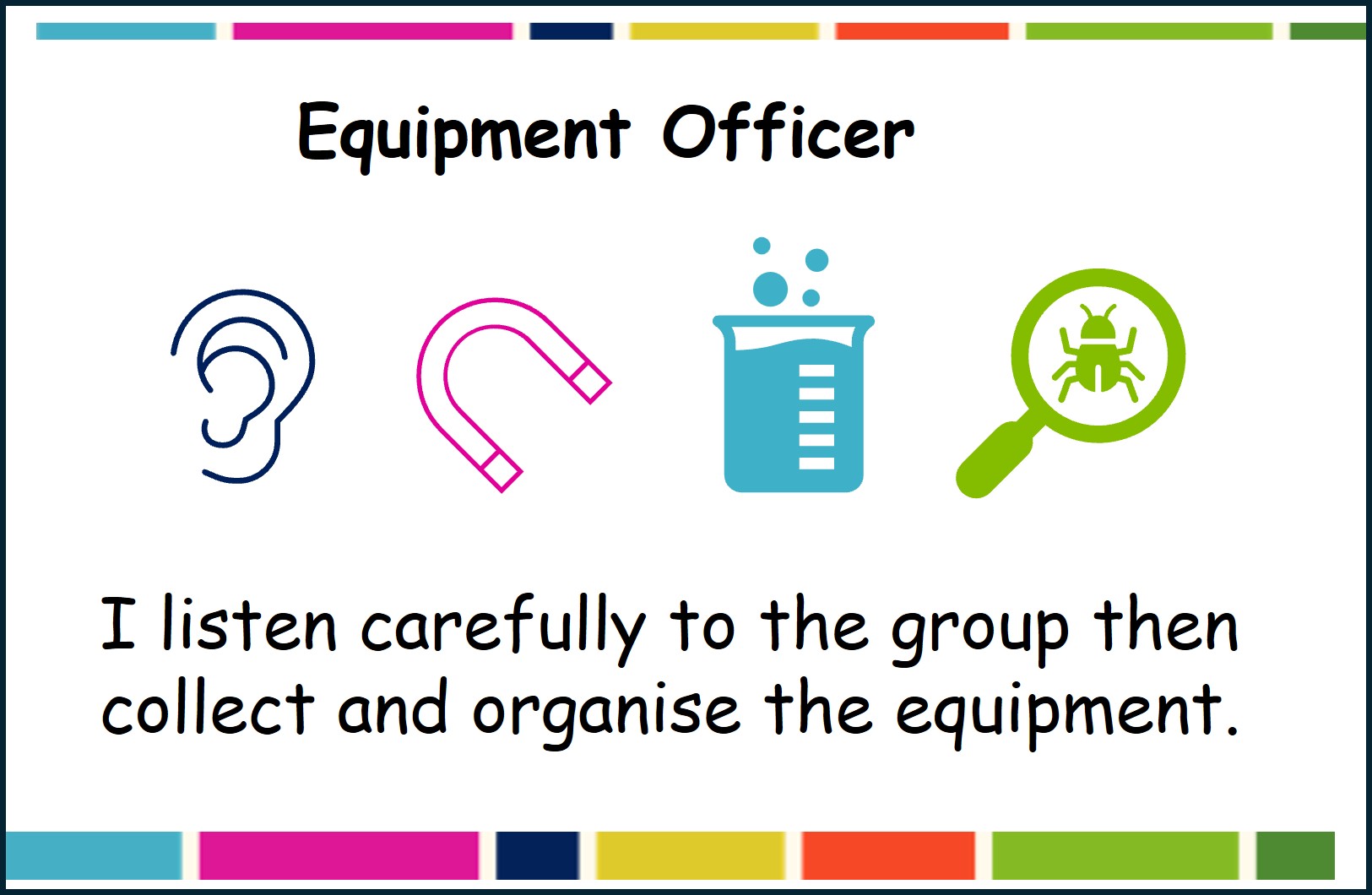
Equipment Officer
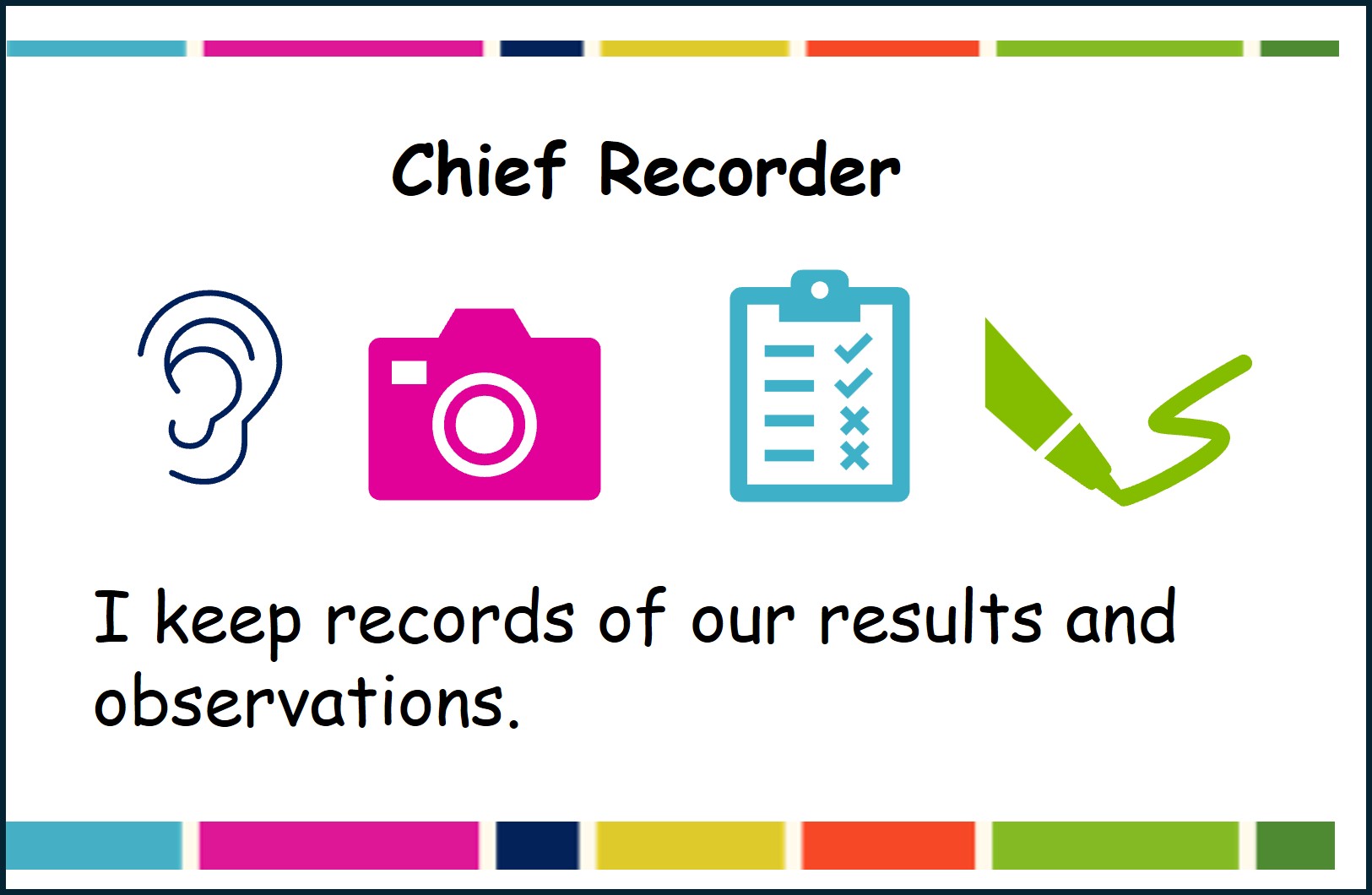
Chief Recorder
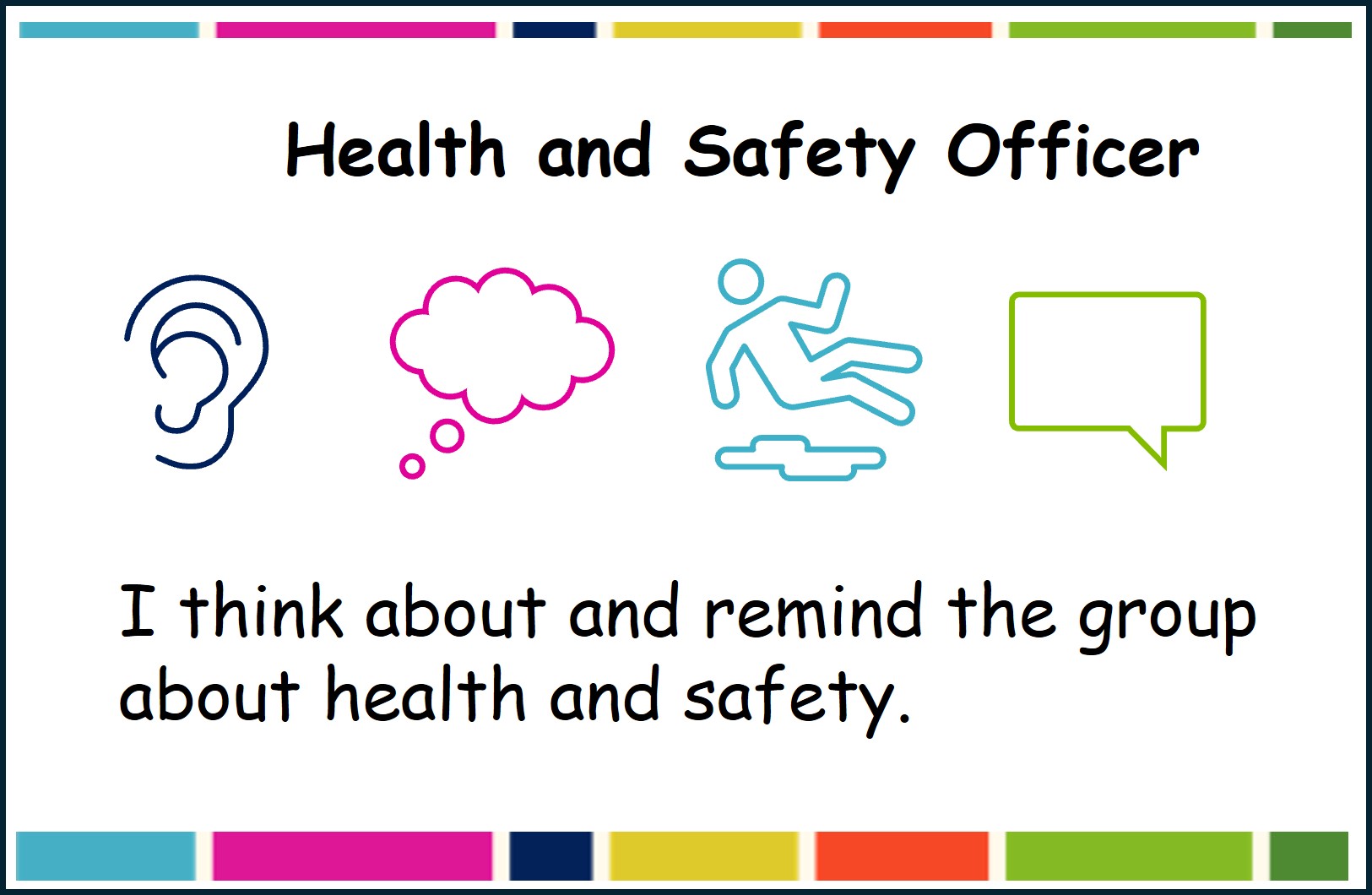
Health and Safety Officer
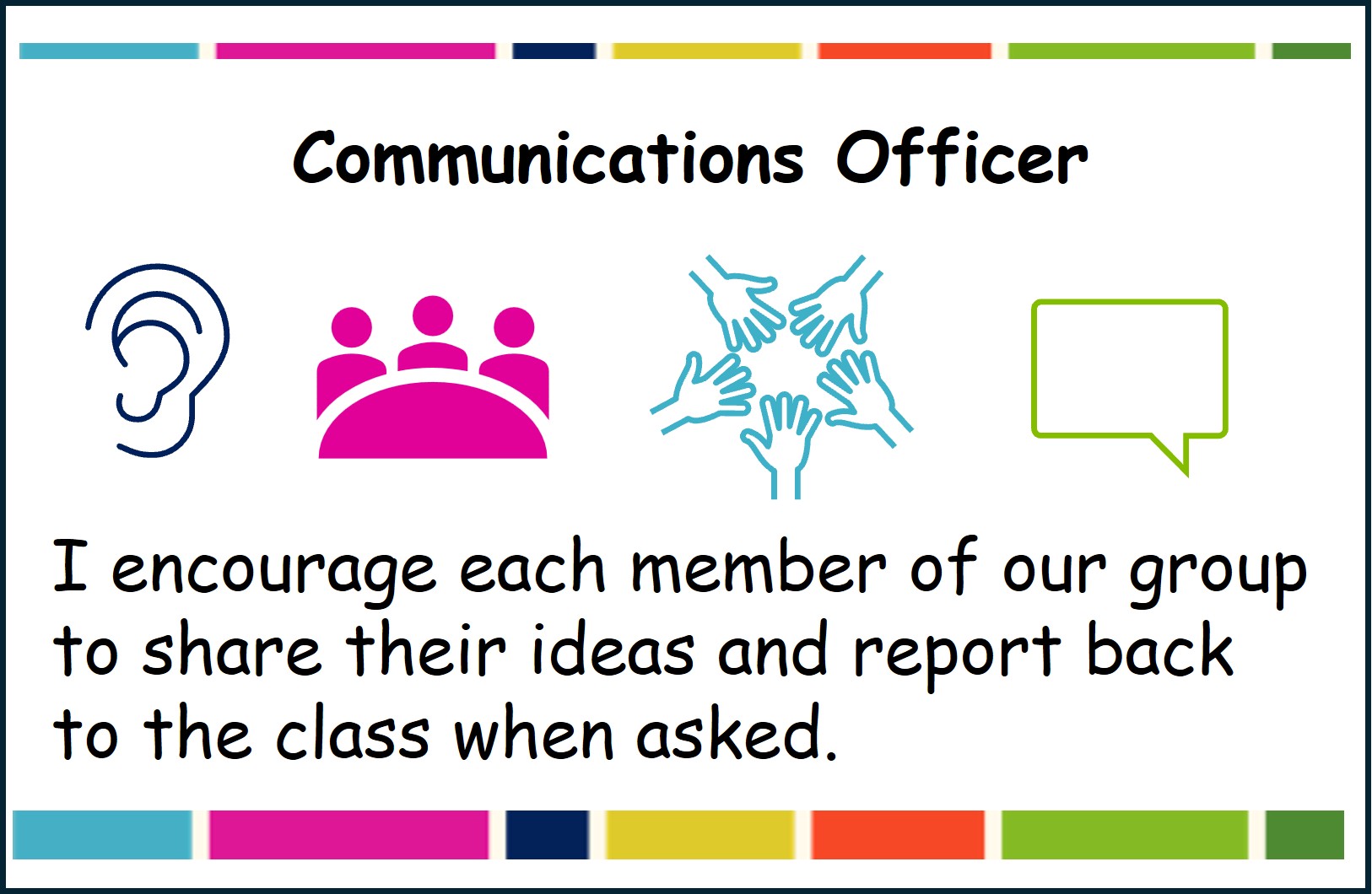
Communications Officer
How to use the Science Role Cards
- Print multiple sets of cards (1 set per group).
- Give each child in the group a card and remind them what their role involves.
- During the practical activity, it can be useful to ask children to refer to their card to check they are on task.
- The roles can be swapped each lesson so that the children experience different tasks and develop different skills.
Download our Science Role Cards.
Further Support
Register for our three-part webinar series taking place from November 2026 to April 2027.
Science for All: Making Primary Science InclusiveIf you would like tailored support to develop an inclusive approach to primary science across your school, our Primary Science Mentors will be happy to help.
In-school SupportSafety Notice & Disclaimer
PSTT advises teachers to refer to either the CLEAPSS website or SSERC website for up to date health and safety information when planning practical activities for children.
PSTT is not liable for the actions or activities of any reader or anyone else who uses the information in these resource pages or the associated classroom materials. PSTT assumes no liability with regard to injuries or damage to property that may occur as a result of using the information contained in these resources. PSTT recommends that a full risk assessment is carried out before undertaking in the classroom any of the practical investigations contained in the resources.

